



General regulations on working hours in Germany that you should know
- 16/05/2025
- Hong Hanh
- News study abroad in Germany
- 1 Comment
Working hours in Germany are clearly and specifically regulated in the Labor Code with many differences compared to Vietnam. Therefore, if you are planning to study or work in Germany, it is extremely important to clearly understand the regulations on working hours, labor culture and employee rights. Let's join SHD Academy Learn about the regulations on working hours in Germany to best prepare for your study and work journey through the following article!
>> See more:
- Should I study vocational training in Germany? The truth about vocational training in Germany
- Is it easy to settle in Germany? Conditions and popular settlement areas
- What is life like in Germany? Daily life habits of Germans.
Why are working hours in Germany the shortest in Europe?
According to German Labor Law, employees are required to work a maximum of 8 hours per day, which means they cannot work more than 48 hours per week. However, the actual working hours of employees in Germany may be lower than this figure. According to Eurostat statistics, the average working hours of employees in Germany are 34.8 hours per week, lower than the European average of 37 hours per week.
It can be seen that Germany is the country with the shortest working hours in Europe. This shows the efforts of the German Government in creating conditions for employees to balance between work and personal life.
In addition, the German Government also has regulations on labor protection and flexible leave regimes, helping employees have reasonable rest time. This contributes to creating a positive working environment and attracting a large number of international human resources to work.
>> Reference:
- Is the income of Vietnamese people in Germany high?
- How much is the cost of living in Germany for international students?
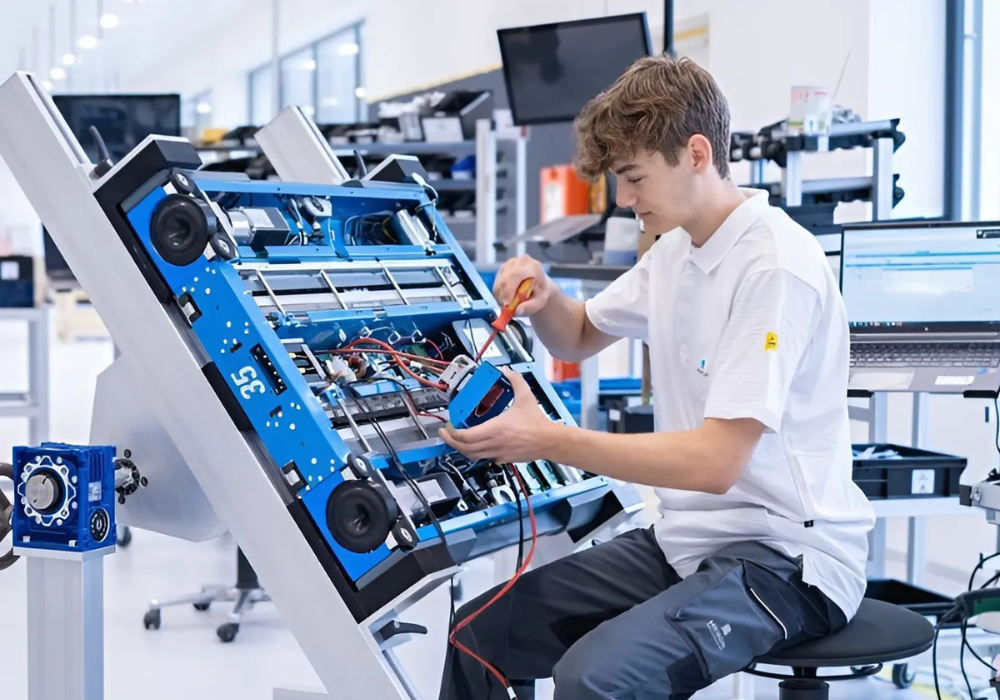
Regulations on working hours in Germany
The German Government's Labor Code clearly stipulates working hours for each type of work as follows:
Children's working hours
In Germany, children's independence is highly valued, so children are also encouraged to participate in appropriate work to accumulate more life experience and practical skills. However, in order to prevent labor exploitation, the German government has issued specific regulations on working hours for children:
- Children under 15 years old are not allowed to work.
- Children aged 15-18 are allowed to do light work during holidays such as summer break, but must have the consent of their parents or guardians.
- Children are not allowed to work at night or on holidays.
- Only allowed to work a maximum of 8 hours/day and no more than 40 hours/week.
Full-time working hours
According to the standards and regulations of most companies in Germany, full-time working hours are usually 48 hours/week, with an average of 8 hours/day from Monday to Friday. However, the full-time working hours of an employee in Germany can vary depending on the industry and the agreement between the employer and the employee. Some companies may apply a longer working week, but must pay their employees higher wages or provide additional annual vacation.
Part-time working hours
Working hours in Germany in the form of part-time work are defined as working hours per week of less than 48 hours. Working hours can be arranged flexibly according to the needs of employers and employees. In particular, part-time workers in Germany still enjoy basic benefits as full-time workers, including sick leave, annual leave and social insurance.
Overtime
Part-time jobs are often chosen by many international students in Germany, because they can both gain more work experience and earn extra income to cover their living expenses. However, part-time jobs in Germany are also strictly regulated, only allowing international students to work a maximum of 60 hours/week, an average of no more than 48 hours within 6 months.
>> Reference:
- Free vocational study abroad program in Germany, high salary
- Summary of the highest paying occupations in Germany in 2025

Regulations on breaks in Germany
To ensure the health and productivity of workers, German Labor Law has stipulated break times as follows:
- Short break: After working for 4-6 hours, workers will have a break of about 15-30 minutes to have a snack, drink coffee and relax.
- Lunch break: Lunch break usually lasts from 30 minutes to 1 hour, enough time for workers to eat and recharge their bodies.
- Break between shifts: For jobs with long shifts, workers have extra time between shifts to relax, ensuring high work performance.
Regulations on holidays, sick leave and maternity leave in Germany
In addition to regulations on working hours and breaks, the German Labor Law also specifically regulates holidays, sick leave and maternity leave for employees. Specifically as follows:
Workers' rest time
Workers in Germany are entitled to at least 11 consecutive hours of rest after each shift. In addition, they usually have full days off on Saturdays and Sundays, or on official holidays.
In case of having to work on these holidays, employees will be arranged to take compensatory leave within 8 weeks from that working day.
Sick leave
In Germany, workers enjoy sick leave with clear and transparent benefits:
- Sick notice: When sick, employees must immediately notify their direct manager or human resources department. If the sick leave lasts more than 3 days, you must provide a medical certificate from a doctor for confirmation.
- Salary payment for the first 6 weeks: If you have worked at the company for at least 4 weeks, during the first 6 weeks of sick leave you will receive 100% your normal salary.
- Sickness benefits after 6 weeks: If your illness lasts longer than six weeks, you can receive sickness benefits (Krankengeld) from the public health insurance (gesetzliche Krankenversicherung). This benefit is usually around 70% of your pre-tax salary, or up to 90% of your post-tax salary, whichever is lower.
- Time to receive benefits: Sickness benefits can be received for a maximum of 78 weeks within 3 years for the same illness.
Please note that to continue receiving benefits after 6 weeks, you will need to provide complete documentation and information as requested by the agency. health insurance in Germany.
>> Reference: Latest information on German vocational training contracts from AZ

Maternity leave
Pregnant workers are given special protection, and will be given leave before and after giving birth, as well as financial support. This is to ensure the health of both mother and baby. The total maternity leave is 14 weeks, including 6 weeks before the birth and 8 weeks after the birth. During maternity leave, the worker is still entitled to the full 100% salary and maternity benefits from the German Government.
If parents want to take extra time off to care for their newborn, they can take up to 3 years off. At this point, they will receive 67% in salary and paid by government employment benefits.
>> Reference:
- [Latest update] How to calculate salary in Germany & minimum wage
- How much tax refund in Germany? Calculation and necessary conditions
Comparing working culture in Vietnam and Germany
When working in Germany, you will notice clear differences compared to Vietnam. For example:
- Difference in working hours: In Germany, the average working week is shorter than in Vietnam. Employees are given more attention to their rest time, with weekends and holidays clearly defined and strictly enforced according to the Labor Law. In contrast, in Vietnam, working hours tend to be longer, and many people have to work overtime to complete their work. Some occupations also require working in the evening or on weekends.
- Difference in working mode: Germany has a strict legal system in monitoring and implementing working regimes such as working hours, holidays, sick leave, maternity leave, etc. These regulations are strictly applied and regularly inspected. Meanwhile, although Vietnam also has regulations on labor rights, in reality, enforcement and compliance monitoring are still limited due to the characteristics of each industry.
>> See more:
- Study and work in Germany: Summary of detailed information
- How much is personal income tax in Germany?
Reasonable working hours in Germany Not only does it help you maintain a work-life balance, it also ensures long-term efficiency and health. Understanding the regulations on working hours will help you avoid unwanted legal mistakes and protect your rights when studying and working in Germany. SHD Academy is a trusted companion, always ready to help you best prepare for your journey. vocational training in Germany. Do not hesitate to contact hotline 0336 760 276 for detailed and quick advice!


[…] >> Reference: General regulations on working hours in Germany that you should know […]